Friday, July 21, 2023

Trust in the LORD! (Psalm 115:9-11)


9 O Israel, trust in the LORD!

He is their help and their shield.

10 O house of Aaron, trust in the LORD!

He is their help and their shield.

11 You who fear the LORD, trust in the LORD!

He is their help and their shield.

It’s hard to miss the point. The call to trust Yahweh is found in every verse in this stanza.

As to the occasion behind the composition of this psalm, we may have a clue in verse 2: “Why should the nations say, “Where is their God?” (in quotation marks). This could have been a taunt in the context of a battle. When do you taunt? Taunting is usually done when you are winning— when you have the upper hand. It could be that the background of this psalm was a military crisis (Longman, TOTC). Israel in engaged in war and the enemies are temporarily winning.

What was Israel’s response to the taunt? They responded by saying that Israel’s God is in the heavens and he does whatever pleases his (verse 3). “He has all power, authority, and knowledge… and acts in his own time and in ways he chooses” (NLT Study Bible). Then Israel proceeds with mocking the idols of the enemies in verses 4-8, which could be read as a counter taunt: they have mouths but are unable to speak, they have ears but can’t hear; with noses but can’t smell, they have hands but unable to feel, with feet but cannot walk, with throats but can’t produce a sound out of it.

In our stanza (verse 9-11), along with the threefold call to trust Yahweh is the threefold use of the metaphor shield. Yahweh is their help and their shield. This metaphor of course is again military inspired. In the midst of this military crisis, they have a defender— a protector.

In the next two verses (12-13), they expressed their confidence that the Lord remembers his people and that he will bless them. He will bless Israel. He will bless the descendants of Aaron the priest and lastly, the category where we belong: he will bless those who fear the Lord, both the small and the great.

Brothers and sisters, we may not be in a military crisis right now but we are all facing song crises in some other shapes and forms. It may be a financial crisis. It may be a relational crisis. It may be a health crisis. But in whatever crisis you may be facing, never forget that your God is in the heavens. And though we may not understand what he is doing for he does whatever he pleases, we trust that he who sits on his throne possesses perfect wisdom, and if we remain in the fear of God, we could have the same confidence as ancient Israel had. The Lord shall surely bless.


Friday, February 7, 2020

On Romans 13:1-7

"a participatory democracy is radically different from the government of which Paul speaks in his admonition to the believers in Rome. It is expected in a participatory democracy that bad laws are to be changed and bad officials are to be ousted."

Thursday, December 6, 2018

Sovereignty plus love and care

God is not limited by our limitations, discouraged by our discouragements, or hindered by our shortcomings. He is sovereign over all things! In the hands of a tyrant such as Herod, this kind of power could terrify and devastate, but when combined with God’s covenantal love and care for his creation and image bearers, it can fill us with hope and peace, no matter what the circumstances.

The First Days of Jesus
Andreas J. Köstenberger
Alexander Stewart

Wednesday, November 7, 2018

Glorifying God by Imitating Him

Wayne Grudem
Business for the Glory of God
He created us in such a way that we would take spontaneous delight in seeing reflections of his character in our own actions and in the actions of others. Though this process is now marred by sin, we still see it happening to some extent. We feel a deep, fulfilling kind of joy and satisfaction in telling the truth (because God is truthful), treating others fairly (because God is fair and just), acting in love toward other people (because God is love), being faithful to our marriages and keeping our word in other commitments (because God is faithful), and so forth. We also enjoy seeing other people act in these ways, because in those actions we catch a glimpse of the character of God. In this way we can begin to understand how to fulfill the command, “So, whether you eat or drink, or whatever you do, do all to the glory of God” (1 Cor. 10:31).

Thursday, November 1, 2018

The Incarnation and the Plan of Salvation

Stephen J. Wellum
Holman KJV Study Bible
Apart from Him as God the Son incarnate, we do not have a Redeemer who can stand on our behalf as a man, let alone satisfy God's own righteous demand upon us due to our sin. After all, it is only God who can save us. By becoming one with us, our Lord not only becomes our sympathetic Saviour, He also accomplishes a work that saves us fully, completely, and finally.

Monday, October 22, 2018

Christian Joy

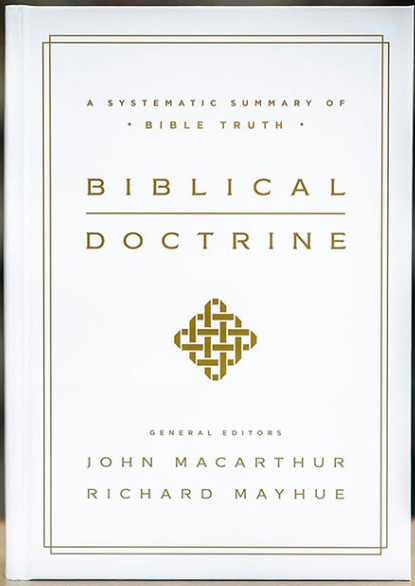
 "Joy is a happiness based on unchanging divine promises and eternal spiritual realities. It is the sense of well-being experienced by one who knows that all is well between oneself and the Lord. Joy is not the result of favorable circumstances but occurs even when those circumstances are the most painful and severe."

John Macarthur
Richard Mayhue

Monday, September 25, 2017

Not just a sign

"Abraham's servant wasn't just asking for a sign; he was asking for a woman of character who would be one in a thousand."

Gary Thomas
The Sacred Search

Thursday, September 7, 2017

Living Sub Specie Aeternitatis

"Contrary to what secular critics say, the Christian does not and cannot hold our life on earth to be unimportant. Indeed, it is of the highest importance. The reason is startlingly obvious, and yet often goes completely unnoticed: it is this life that determines our status in the next life. Our fate for eternity hinges on how we live now So living sub specie aeternitatis (in the shadow of eternity), far from being a way to escape the responsibilities of life in this world, is actually a way to imbue life with a meaning that will outlast it. It is to give life much greater depth and significance because it is part of a larger narrative of purpose and truth."

Dinesh D'Souza
What's So Great About Christianity

Thursday, December 15, 2016

The One True God and the Invented Ones

Implicit in Christian monotheism was a critique of pagan polytheism. According to the Christians, the Greek and Roman gods were human inventions. Look at the gods of Homer. Each of them seems to embody a human quality: Aphrodite is the goddess of sexual desire, Ares is the god of conflict, and so on. The gods have the same petty vanities and jealousies as their human counterparts. Their virtues are human virtues writ large. As classical scholar Mary Lefkowitz puts it, "The life of the gods is a highly idealized form of what human life would be if mortals were deathless, ageless, and strong." Ironically, this criticism of invented deities, which seemed valid when it was launched against ancient polytheism, is today leveled against Christianity. As Daniel Dennett and Richard Dawkins would have it, the Christians too have invented their God. But the Christian God is not like human beings at all. He is outside space and time. He does not have a body. He is a purely spiritual being. He can be comprehended only dimly by humans, who resort to anthropomorphic images and analogies.

Dinesh D’Souza
What's So Great About Christianity (page 50)

Thursday, March 31, 2016

Political Leaders and Divine Accountability

"Whatever the form of government, no branch of government and no person in power may usurp ultimate authority or be given our ultimate loyalty... Every leader in any country ought to recognize his accountability to the highest Ruler of all. Given human experience, any form of political power can be corrupted. But absolute power is corrupted absolutely. No human being... is wise enough or good enough to be given unaccountable power. Even where human accountability is built into political structures, the fullest alleviation of political injustice will not come without ultimate accountability to the all-knowing God.

... the major responsibility of Christian ministers is to call political leaders to accountable stewardship before God on whom they depend for their life and  breath... we must deliver the divine summons to repent to leaders who are inexcusable for not living up to the moral and spiritual truth they ought to see clearly."


~ Gordon R. Lewis
Integrative Theology, Volume 1

Friday, March 18, 2016

God's Moral Standards Applied to Political Leaders

"... there are several passages in the Old Testament prophets that address the sins of foreign nations around Israel... These prophets could speak to nations outside of Israel because the God who is revealed in the Bible is the God of all peoples and all nations of the earth. He is their Creator, and they will one day stand before him in judgment. Therefore the moral standards of God as revealed in the Bible are the moral standards to which God will hold all people accountable. This includes more than the way people conduct themselves in their marriages and families, in their neighborhoods and schools, and in their jobs and businesses. It also concerns the way people conduct themselves in government offices. Believers have a responsibility to bear witness to the moral standards of the Bible by which God will hold all people accountable, including those people in public office."

~ WAYNE GRUDEM
Politics According to the Bibl
e

Tuesday, March 8, 2016

Ethics in Creation and Evolution Compared

The biblical teaching is that the human race has fallen from an original innocence, and that our tendencies to violence, greed, lust, deceit, and selfishness are in some sense unnatural for us. This teaching is at direct odds with the notion that the human race evolved from similar primate species, and that our unethical tendencies are actually part of our evolutionary history (perhaps necessary aspects of the “survival of the fittest”).

Kenneth Boa & Robert Bowman Jr.
An Unchanging Faith in a Changing World

Thursday, March 3, 2016

Three Cornerstone Affirmations of the Biblical Worldview


 1. MONOTHEISM affirms that there is one God who created the world, who made human beings to be creatures who could relate personally both to other creatures in the physical world of which they are a part and to the God who made them, and who holds human beings accountable for their willful breaking of these relationships.

2. INCARNATIONALISM affirms that this God, who revealed himself to us in Scripture, revealed himself supremely by becoming human uniquely in Jesus of Nazareth, who as the Son revealed the Father who sent him and the Spirit whom he sent after he died and rose again to restore our relationship with God.

3. EVANGELICALISM (used here in a broader sense than usual) affirms that through faith in Jesus as our great God and Savior we enjoy that restored relationship with God and begin to learn again how to honor God in our relations with one another and with his creation.


Kenneth Boa & Robert Bowman Jr.
An Unchanging Faith in a Changing World

Thursday, January 7, 2016

The Distinctive Feature of the Holy Spirit's Work

"... the third person is distinctively the One who powerfully brings to fulfillment in our lives the redemptive transformation envisioned by the Father and provided for by the Son.

... Holiness is not only an attribute but also a distinctive feature of the Spirit’s ministry. The third person convicts of sin, regenerates, and sanctifies. Insofar as converted sinners progressively become holy, their virtue can be traced to the Spirit’s teaching, illumination, leading, abiding, and cultivating of Christlike holiness."

~ GORDON R. LEWIS
    Integrative Theology

Saturday, January 2, 2016

Choosing Leaders

"It is a serious responsibility to appoint or elect wise and just officials. In your sphere of influence—home, church, school, job—are you ensuring that justice and godliness prevail? Failing to choose leaders who uphold justice can lead to much trouble..."

Life Application Study Bible

Notes on Deuteronomy 16:18-20

Tuesday, December 22, 2015

God can use frail servants

"Human frailty (e.g., youth or difficulty in speech) is no excuse before God’s expressed will to grant a person the words to say and the opportunities to deliver them."

J. Andrew Dearman 
Jeremiah, Lamentations (NIVAC)

Thursday, December 17, 2015

The IMMEDIATE PURPOSES of God's revelation are subservient to its OVERARCHING PURPOSE

It seems clear that those who were used by God in the writing of the Old Testament Scriptures did not do so with the primary thought in mind that their words, centuries down the road, would be a source of encouragement for Jews and Gentiles, united in the one body of Christ. But God’s intent in the writing of Scripture is here expressed in plain words: The immediate purposes of the prophetic ministry, while used as means to bring the Scriptures into existence, are subservient to God’s overarching purpose, which is providing the body with its chief means of encouragement and guidance. What was written “before” or in “earlier times” was written not just for those who lived then—a greater purpose was in sight, as it was written “for our instruction."

James R. White (Scripture Alone)

Thursday, December 3, 2015

The Heart and Mouth Connection

"... when the heart is filled with good and noble intentions the good man’s speech will prove this to be a fact. The rule according to which whatever a man has set his heart on, so that the very core and center of his being is full of it, will sooner or later be disclosed in his speech..."

William Hendriksen
Exposition of the Gospel According to Matthew

Friday, November 27, 2015

Use Your Weapon

"When we fail to quote Scripture in public and private discussions about hundreds of questions, we leave our most powerful weapon at home...
Stewards of the Word of God, unleash it! Release its power to a lost and dying world!"

~ Wayne Grudem
  Presidential Address: Evangelical Theological Society's 51st annual meeting (Nov. 17, 1999)

Tuesday, November 3, 2015

The Frustrations of a Maturing Christian

"... the more we become like Christ, the more sensitive we are to the remaining corruptions of the flesh. As we mature in godliness our sins become more painful and more obvious to ourselves. The more we put away sin, the more we notice sinful tendencies that still need to be put away. This is the paradox of sanctification: the holier we become, the more frustrated we are by the stubborn remnants of our sin."

~ John Macarthur
   The Vanishing Conscience

Trust in the LORD! (Psalm 115:9-11)

  9 O Israel, trust in the LORD! He is their help and their shield. 10 O house of Aaron, trust in the LORD! He is their help and their...